
London & South-East England
External Wall Insulation Installers in London
External wall insulation wraps the outside of your home in an insulating board, then finishes it with a protective, weatherproof render. For the solid-wall Victorian, Edwardian and pre-1930s housing that dominates much of London and Kent, it is the single most effective thermal upgrade available — typically cutting wall heat loss by around 70% without losing a single centimetre of internal floor space.
What external wall insulation costs with us
£11,880 to £23,118
The middle half of 170 priced external wall insulation quotes. Median £17,300.
Typical rate £130 to £140 per m² for the external wall insulation itself.
Full price breakdown and real jobsFrom our quote book of 454 priced quotes. 0% VAT on insulation until 31 March 2027.
External Wall Insulation: key facts
- Best for solid-wall homes (typically pre-1930s) with no cavity to fill.
- Cuts wall heat loss by around 70% and eliminates cold bridging.
- System rate £110–£140/m²; finished jobs £176–£232/m² all-in, about £12,000–£22,000 for a 3-bed semi.
- Adds insulation outside, so you lose no internal floor space.
- Not suitable for most conservation areas or listed frontages — choose IWI there.
- PAS 2030:2023 certified, TrustMark registered, 10-year manufacturer warranty and 25-year insurance-backed guarantee.
What is external wall insulation?
Because the insulation sits on the outside, EWI also eliminates cold bridging, protects the original brickwork from weather, and gives tired façades a clean, modern finish. The trade-off is that it changes the external appearance, so it is not suitable for most conservation areas or listed frontages — in those cases internal wall insulation is the right call.
We are a PAS 2030:2023 and TrustMark certified installer and fit manufacturer-approved systems end to end with our own trained team — no subcontractors. Every quote is free, fixed and itemised, with a written specification you can rely on.
External wall insulation is a layered system fixed to the outside of your existing walls. From the wall outwards: an adhesive bed, an insulation board (usually 60 to 150mm thick), a glass-fibre mesh set into a base coat, and a finish coat of silicone, mineral or acrylic render. Brick slips or cladding can replace the render where a brick look must stay.
It is not the same as cavity wall insulation, which fills the gap between two skins of brick. EWI is for solid walls, typically anything built before about 1930 with one skin of brick around 9 inches thick, and for some 1930s to 1970s non-traditional concrete houses.
The thermal change is large. A pre-1919 solid brick wall has a U-value of around 2.1 W/m²K. With 100mm of EPS or mineral wool EWI it drops to roughly 0.27 W/m²K, about seven times better. Rooms stop feeling cold near the walls, and the condensation that forms on cold wall surfaces in winter goes away.
External Wall Insulation cost in London
Prices from our own quote book and finished jobs in London and the South-East, not national averages. Every quote is free, fixed and itemised after a survey.
| Job type | Cost |
|---|---|
| Mid-terrace (rear/side elevations)Fewer elevations to treat | £8,000 – £14,000 |
| Typical 3-bed semi-detachedMost common project size | £12,000 – £22,000 |
| Detached houseSeven detached jobs we won: £16,590 to £32,220 | £16,000 – £32,000 |
| Per m², system rateBoard, render and labour: the headline rate | £110 – £140 / m² |
| Per m², finished job all-inMeasured jobs incl. scaffold, beads, reveals, sills | £176 – £232 / m² |
What changes the price
- Scaffold and access. A detached house with clear access on all sides is one cost; a mid-terrace that needs a neighbour's garden is another. See scaffolding and access costs.
- Detail work. Bay windows, parapets, lintels, sill extensions and balcony returns all add labour. A house with a two-storey bay costs more than the same house without one; see insulating around bay windows.
- Reveals and roofline. Shallow window reveals need special beads, and eaves often need the fascia or bargeboard extended to keep the wall weathered. See gutters, soffits and pipework.
- The finish. Silicone render is the usual choice; brick slips cost noticeably more.
This is why a finished job costs more per m² than the headline system rate: scaffold, beads, reveals, sills and making good are spread across the wall area. Be wary of any quote that does not list scaffold, materials and labour separately; our line-by-line walk through is in what is in an EWI quote.
Insulation is zero-rated for VAT until 31 March 2027 (see 0% VAT on insulation). We work on privately funded jobs; for what grant help exists, read our insulation grants guide.
Every figure on this page comes from our quote book. The full dataset, with each finished job listed, is in what insulation really costs in London.
What real jobs actually cost
Anonymised prices from recent jobs our own team won and installed across London and the South-East. Every home differs — your fixed, itemised quote follows a free survey.
| When | Area | Work | Size | Price |
|---|---|---|---|---|
| April 2026 | Worcester Park (KT4) | External wall insulation | 58 m² | £13,352£232/m² |
| March 2026 | South Norwood (SE25) | External wall insulation | 62 m² | £12,600£202/m² |
| January 2026 | Ruislip (HA4) | External wall insulation | 102 m² | £17,898£176/m² |
| October 2025 | Kingston upon Thames (KT2) | External wall insulation | 90 m² | £19,520£216/m² |
| June 2025 | High Wycombe (HP11) | External wall insulation | — | £23,350 |
| April 2025 | Raynes Park (SW20) | External wall insulation | — | £22,130 |
| January 2025 | Worcester Park (KT4) | External wall insulation | — | £19,180 |
| January 2025 | Tooting (SW17) | External wall insulation | — | £3,800 |
Prices are real totals paid for the specific scope of each job (access, condition and finishes vary) — use them as honest reference points, not like-for-like quotes. Full cost guide
Recent external wall insulation work
Real jobs completed by our own team across London and the South-East.
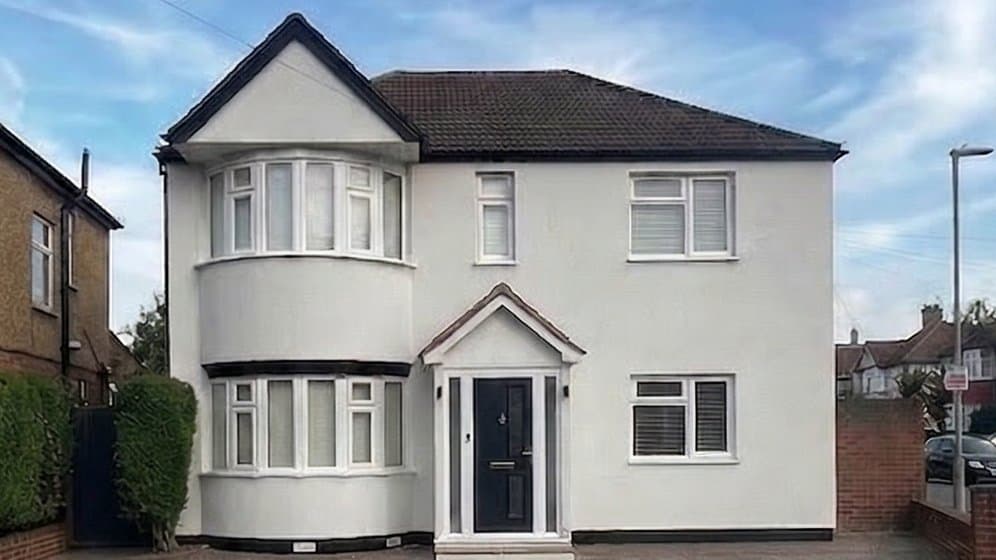
90mm EPS External Wall Insulation
External wall insulation in Harrow
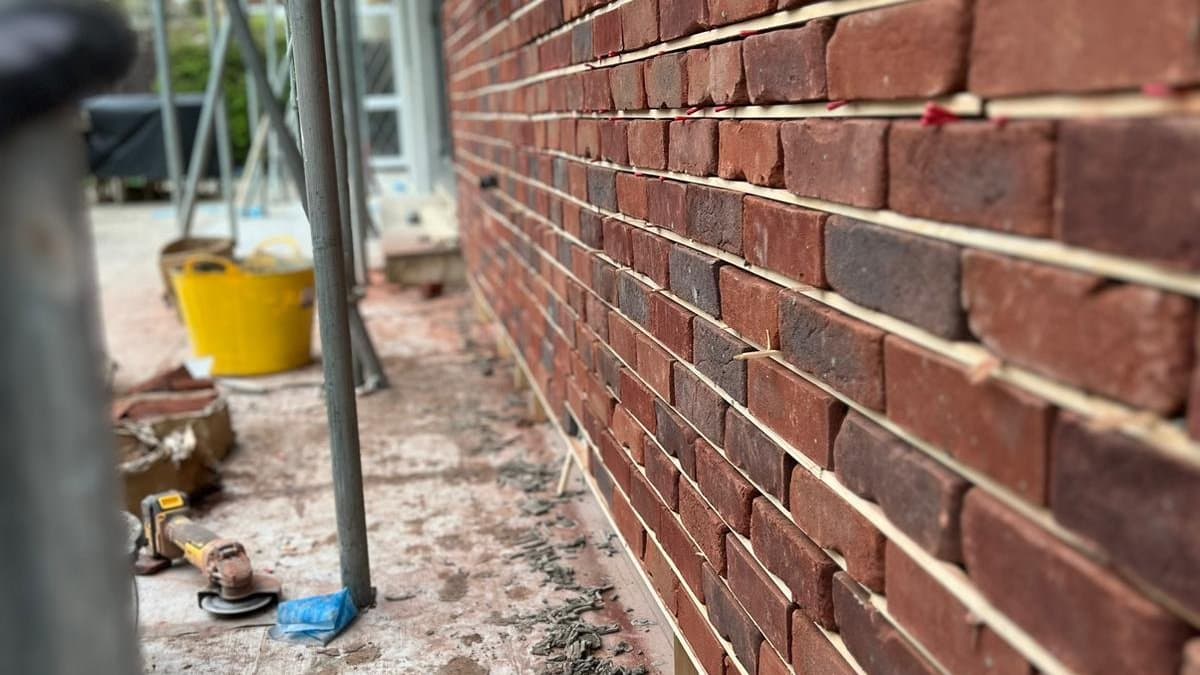
Brick Slips
Brick slip installation instead of render
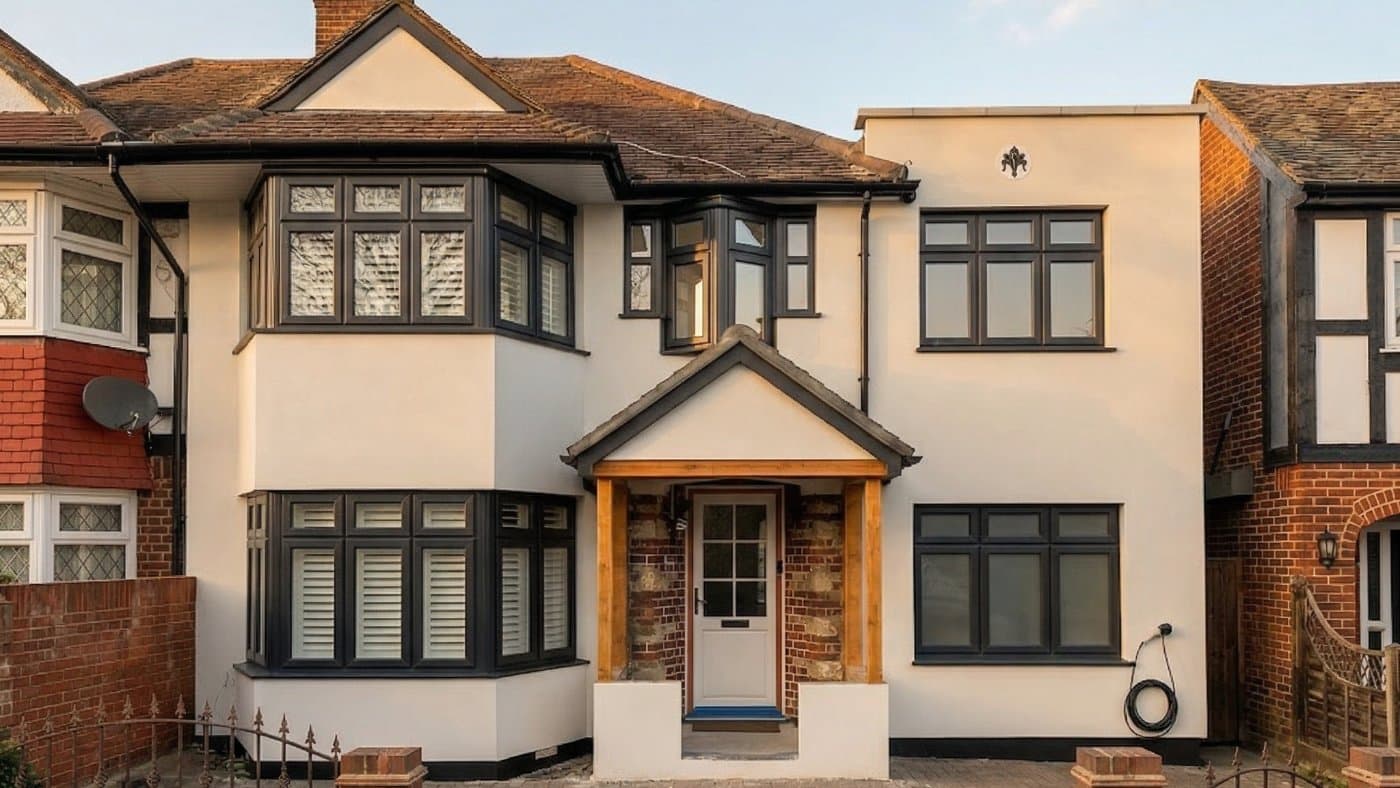
External Wall Insulation
Finished Install in SW London
Is external wall insulation right for your home?
- Solid-wall properties (typically pre-1930s) with no cavity to fill
- Homes outside conservation areas where external changes are permitted
- Owners wanting the biggest possible thermal gain in one project
- Tired pebbledash or render façades due for refurbishment anyway
- 1930s–1960s semis where the whole house can be treated at once
EWI is usually the right call when:
- You have solid walls (one skin of brick, about 9 inches thick).
- External changes are permitted: the house is not listed and not in a conservation area that restricts the front.
- You want to keep all your internal floor area and can accept 100 to 150mm added to the outside.
- The render or pointing is failing anyway, so outside work is due regardless.
It is not the right call when:
- The house is listed or in a strict conservation area. Choose internal wall insulation for those elevations.
- It is a flat in a block and you do not control the whole elevation.
- The walls are damp from rising or penetrating moisture that has not been fixed. EWI does not cure that damp; fix the cause first.
- There is active structural movement. Cracks carry through the render.
- You have cavity walls. Cavity wall insulation is normally cheaper and easier.
Not sure which walls you have? Our guide to telling cavity walls from solid walls shows the brick-bond test, and planning permission for EWI covers where consent is needed. If a mix of both suits the house, see hybrid wall insulation.
External Wall Insulation systems and materials
The system matters more than any single product. Adhesive, board, mesh, base coat and finish must all come from one manufacturer's tested build-up. Mixing components is how warranties are lost and how render starts to crack or come away a few years later.
| Board | Typical thickness | Best for | Cost band |
|---|---|---|---|
| EPS (expanded polystyrene) | 90 to 150mm | Most houses: proven and cost-effective | £ |
| Mineral wool | 100 to 160mm | A1 non-combustible jobs: flats, taller buildings, near boundaries | ££ |
| Phenolic / PIR | 60 to 100mm | Where the build-up must stay slim | £££ |
| Wood fibre | 100 to 160mm | Period houses that need a vapour-open wall | £££ |
EPS is the workhorse: light, easy to cut, moisture resistant and certified by every major system supplier. It is the board we specify most often. Mineral wool gives full A1 non-combustibility and is more vapour-open, so it suits flats and homes close to a boundary. Phenolic boards reach the same U-value in 60 to 80mm, which helps where sills, overhangs or a boundary limit how far the wall can grow, but they cost more per m². Wood fibre keeps an old masonry wall vapour-open, the right choice on heritage homes. The trade-offs are set out in EPS vs mineral wool for EWI, and the finishes in EWI render systems compared.
Products we install
EPS EWI Boards
Expanded polystyreneThe most widely used EWI board. Moisture-resistant, lightweight, and cost-effective. Available in a wide range of thicknesses for flexible specification.
Kingspan Kooltherm K5
Phenolic foamPremium closed-cell phenolic board delivering best-in-class U-values at minimal thickness. Ideal for EWI where wall build-up must be kept slim.
Mineral Wool EWI Boards
Stone woolNon-combustible A1-rated boards for fire-critical projects. Naturally breathable and suited to solid masonry walls. Excellent acoustic performance.
STEICO Special Dry Wood Fibre
Wood fibreSustainably sourced wood fibre board with a breathable render finish. Handles moisture without degrading — ideal for older or solid-wall properties.
The mistakes that make external wall insulation fail
Most failed EWI comes down to the same handful of mistakes.
1. A mixed system
Adhesive from one supplier, boards from another, mesh and render from two more. It can look fine for two years; by year five the base coat is coming away from the boards or the finish is crazing. Every supplier publishes a tested build-up. Stick to it.
2. Too few mechanical fixings
Boards need adhesive and mechanical anchors, typically 6 to 9 per m² and more at corners and openings. Adhesive only is a false economy, especially on old, dusty surfaces.
3. Missing bell-cast and stop beads
The render must stop cleanly at every edge: windows, doors, copings and the plinth. Without proper beads, water tracks behind the system. This is the most common failure point.
4. Ignoring moisture inside the house
EWI moves the dew point outwards, which is good. But if the inside is then sealed with vinyl paper or oil paint and there is no extract ventilation, moisture has nowhere to go. See ventilation after insulating.
5. Skipping the soffit and verge detail
Where the wall meets the roof, the soffit must come out far enough to cover the new wall thickness and the bargeboards need extending. Skip it and water, birds and cold air get in behind the system.
How external wall insulation installation works
Free survey
We assess wall construction, check for damp, measure up and confirm whether EWI is the right specification for your property.
Specification & quote
A fixed written quote within 24 hours, including board type, render finish, scaffolding and making good.
Installation
Scaffold up, boards mechanically fixed and bonded, beads and mesh set, then base coat and decorative render applied by our own team.
Sign-off & guarantee
Final inspection, TrustMark lodgement, a 10-year manufacturer warranty and a 25-year insurance-backed guarantee.
Step by step on a typical house
- Survey and quote. About an hour on site: we measure the walls, check the substrate and photograph every detail point (windows, eaves, soffit, plinth). Written quote within 24 hours.
- Planning check. Most houses are permitted development. In a conservation area, listed or borderline case we make a planning enquiry and apply where needed.
- Scaffold up with a debris net, usually days 1 to 2.
- Substrate preparation. Loose render hacked off, cracks raked out and filled, repointing where needed. This unglamorous stage decides how the system performs in ten years.
- Boards on. Adhesive dabs and a perimeter bead, boards staggered, anchors fixed once the adhesive has gripped.
- Reinforcement. Mesh set into the base coat with 100mm overlaps, beads on every corner and extra diagonal mesh at the corners of openings.
- Finish coat. Primer, then your chosen render, usually silicone for its dirt and water resistance.
- Detailing. Sills extended, soffits covered, downpipes and meter boxes refixed on packers.
- Sign-off. Final inspection, snags cleared, TrustMark lodgement and the warranty and guarantee paperwork.
A typical 3-bed semi takes 2 to 4 weeks, weather dependent. Render needs temperatures above 5°C and dry conditions, so we plan around the season; see when to book EWI.
Free survey and a fixed quote
Book a free, no-obligation survey and we'll send a clear, fixed written quote within 24 hours: PAS 2030:2023 certified and TrustMark registered, with all work installed by our own trained team.
External Wall Insulation across London
Our team installs external wall insulation across London and the South-East. These local pages carry area-specific advice and nearby jobs. See every area we cover.
External Wall Insulation FAQs
How much does external wall insulation cost?
Are you external wall insulation contractors or a sales company?
Do I need planning permission for EWI?
Will EWI cause damp?
How long does it take?
How much will it save on heating bills?
Does EWI affect my home insurance?
Will EWI fix damp?
Can I keep a brick look?
How long does external wall insulation last?
Can EWI be installed in winter?
Guides on external wall insulation
Detail on the questions homeowners ask us most.
- What EWI really costs in London (real jobs)
- Every line of an EWI quote explained
- External vs internal wall insulation
- Planning permission for EWI
- EPS vs mineral wool boards
- Silicone, mineral and acrylic render
- Pebbledash: re-render or insulate?
- Insulating a 1930s semi
- Scaffolding costs on insulation jobs
- When to book EWI
Other insulation services
Last reviewed September 2026 by Stay Warm Insulation.
Get a free external wall insulation quote
Leave your details and we'll call you back within one working day to arrange a free survey.